Education and comfort only. Used alongside standard care, never as a replacement for diagnosis, treatment or prescribed medicine. Benefits vary. Evidence is limited for gentle movement practices.
Movement 1 · Lift the sky, softly
Set up for seated Baduanjin for seniors
Choose seated first. For osteoporosis, high blood pressure or glaucoma: keep your head above your heart, keep your spine upright, avoid deep bends, forceful twists, straining and breath holding. Ask your clinician about new exercise, recent surgery, fractures or unstable symptoms.
Inspired by the traditional Eight Brocades. These reduced-range chair and supported-standing options are editorial safety adaptations, not a clinically validated protocol or an endorsed NIH sequence. General qigong studies do not prove benefit for this exact routine. A qualified clinician or instructor should individualize movements for your health and balance.
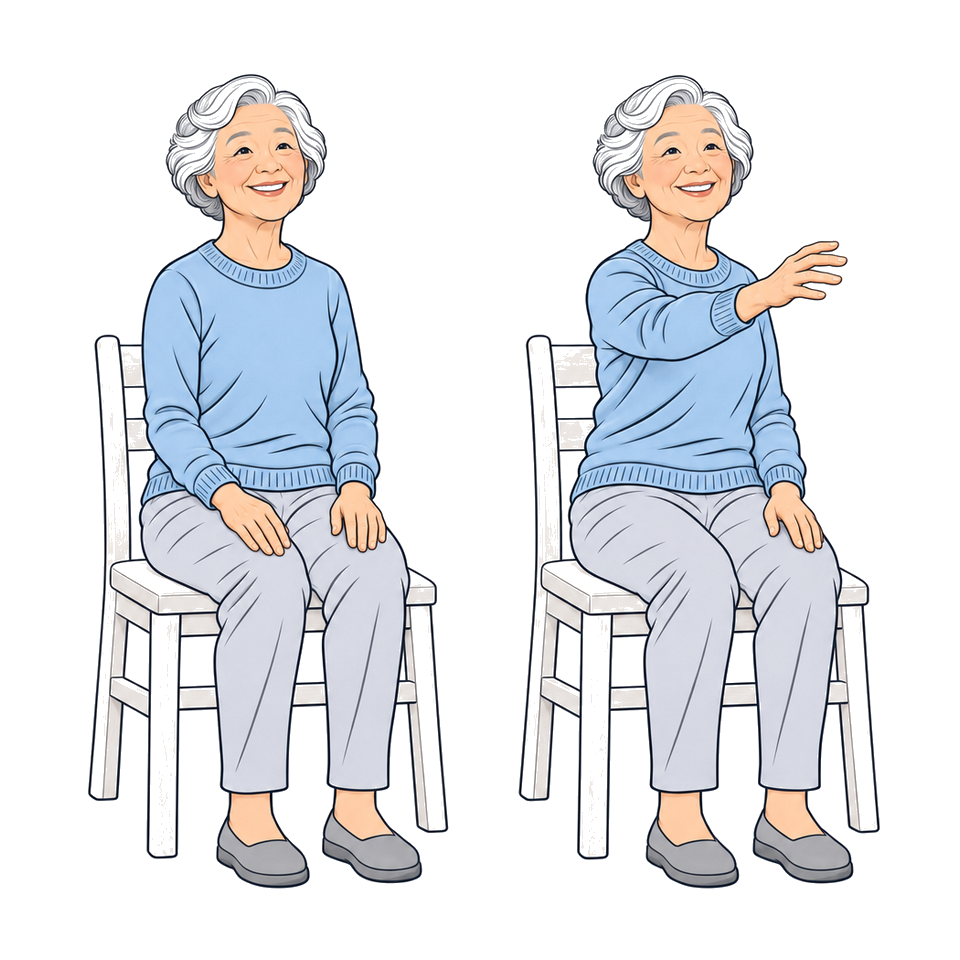
Mirror view: move the arm on the same side of the picture. Follow the written seated or chair-supported steps; the illustrations are not color-coded.
The illustrations show the seated option. Arrows mark the direction of gentle movement. Keep breathing comfortably throughout.
Start with one comfortable repetition each side. Rest freely. Skip any movement that is unsuitable for you.
01
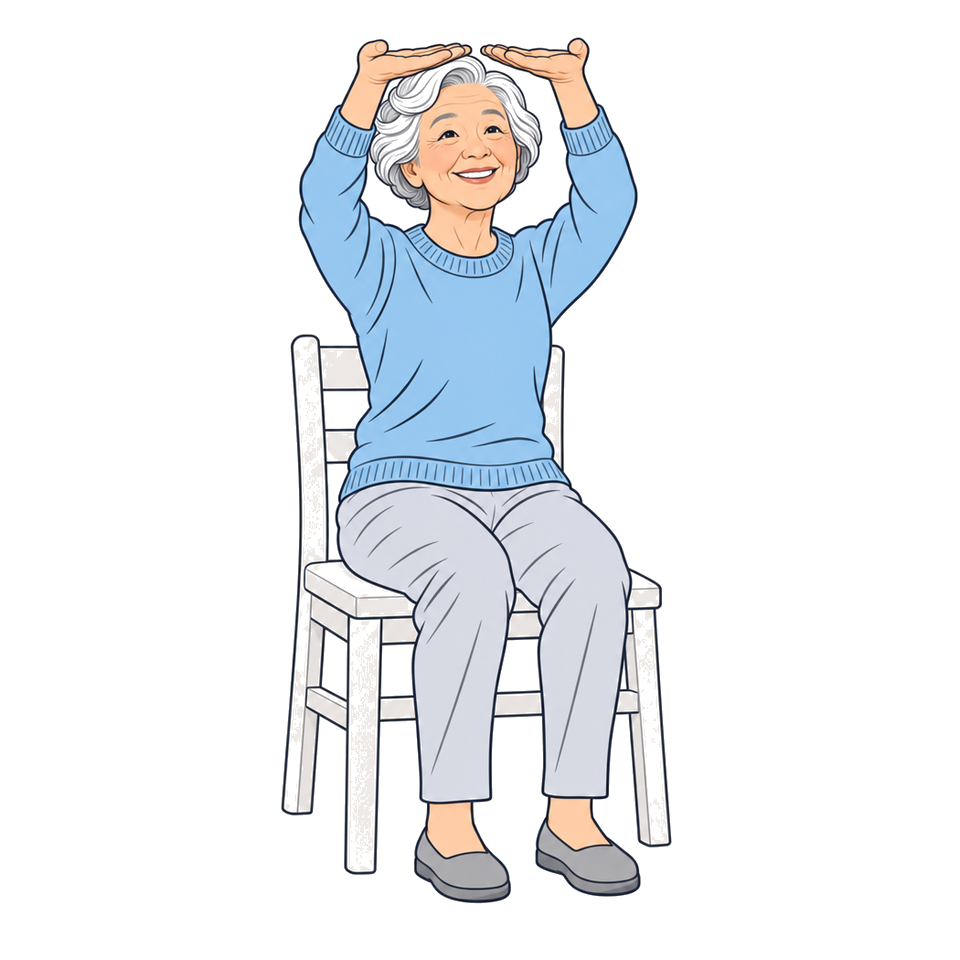
Two Hands Support the Sky
Lift the sky, softly
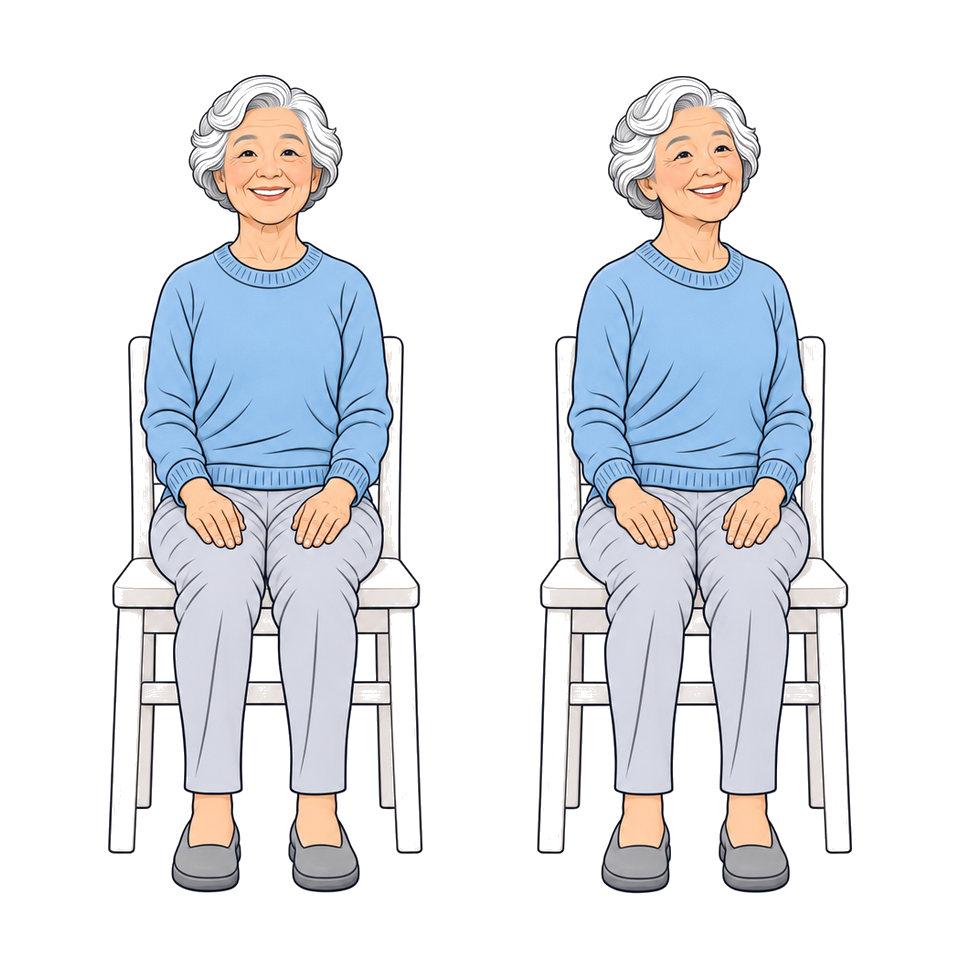
Seated illustration · feet supported
Seated Safe Option · first choice
Sit tall, feet flat. Lift both palms upward in front of your forehead, to at most head height. Soften your elbows and lower slowly.
Compare the standing option
Hold a sturdy chair with one hand. Lift the free hand to at most head height, only if comfortable. Lower, then change sides; keep both feet planted.
Keep it safe: Keep hands below shoulder height if shoulders hurt. Avoid overhead strain or leaning backward.
Move with easy, unforced breathing. No breath holding. Try one slow repetition per side, then rest.
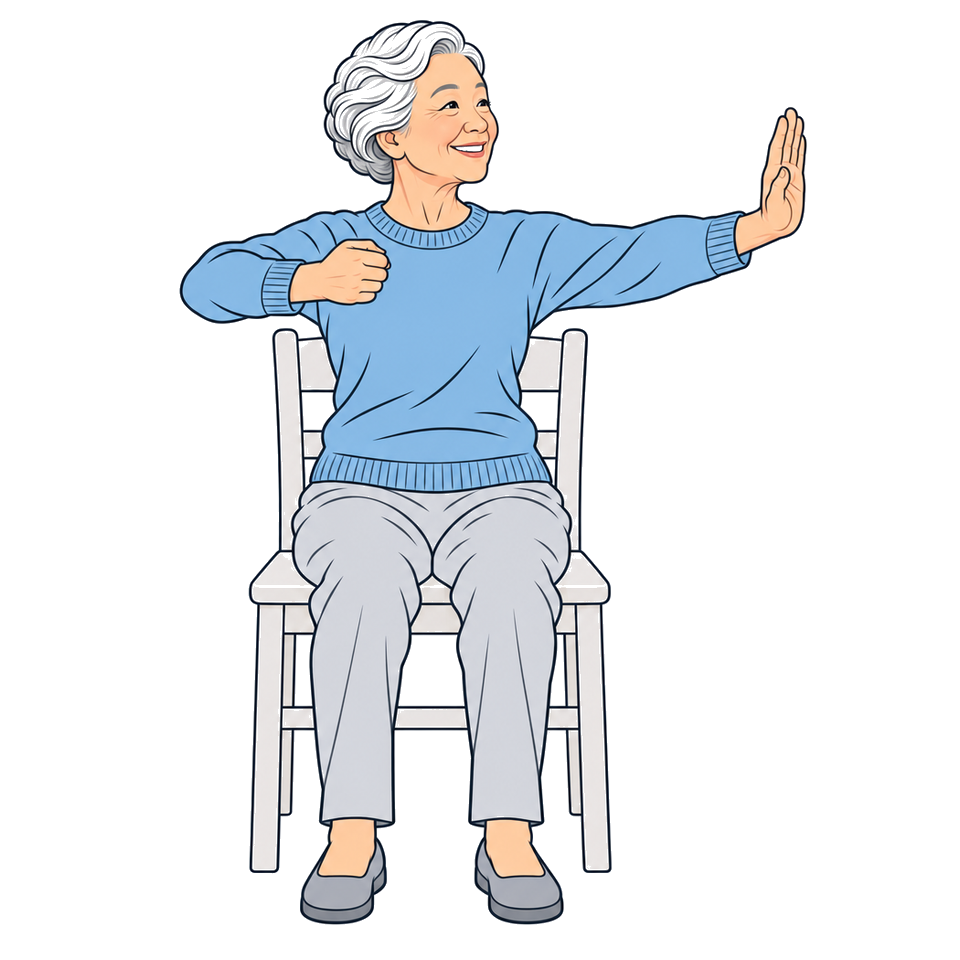
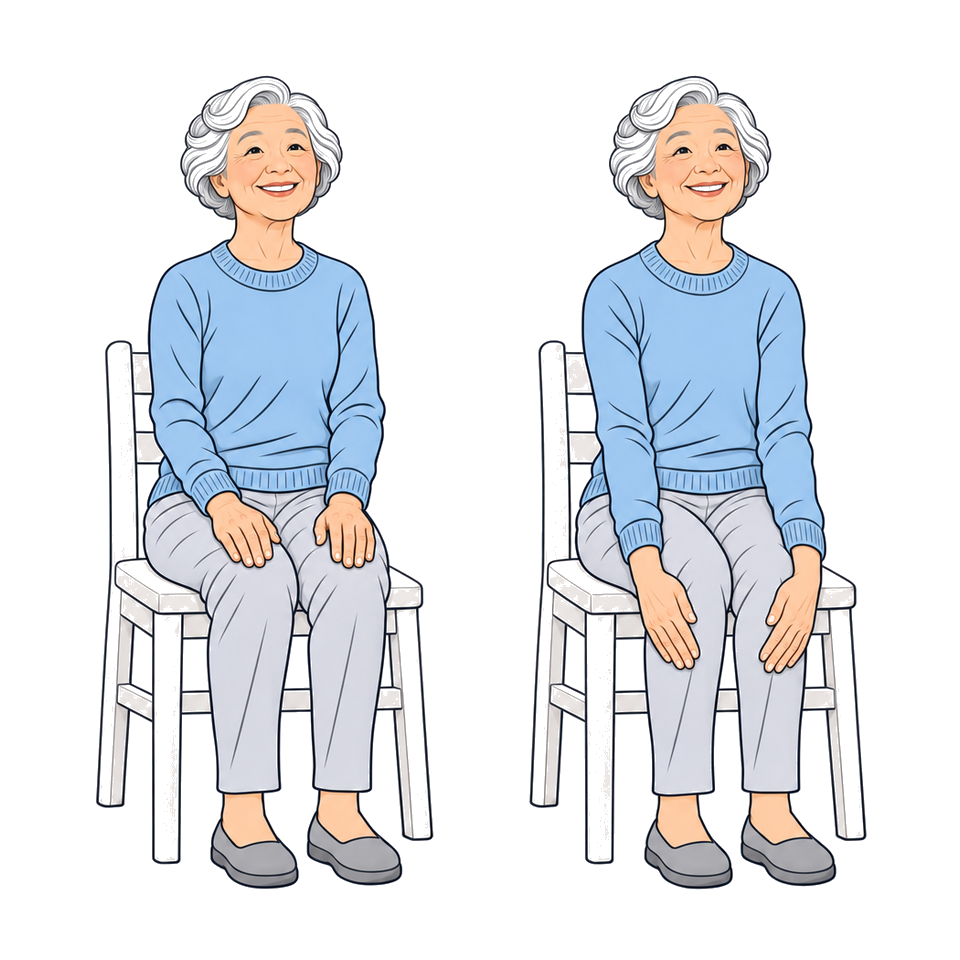
1Sit square2Turn your chest slightlySeated illustration · feet supported
Seated Safe Option · first choice
Choose seated. Keep hips and feet still, hands on thighs. Turn the chest a little to one side with head aligned over the trunk. Return and change sides.
Compare the standing option
Use both hands on the chair and keep the head still. Make only a tiny comfortable shift through the upper trunk; choose seated if unsure.
Keep it safe: No head shaking, neck circles, deep squats or large sway. Stop for vertigo. With osteoporosis, skip the twist and breathe seated.
Move with easy, unforced breathing. No breath holding. Try one slow repetition per side, then rest.
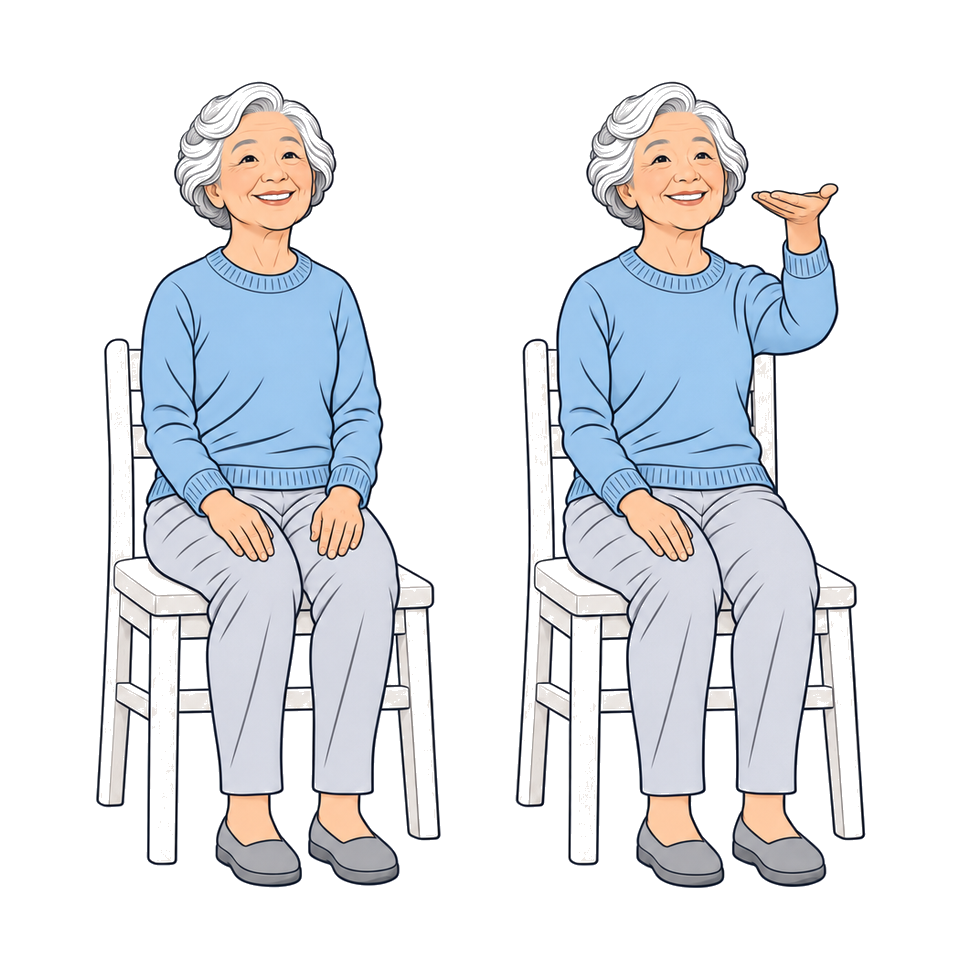
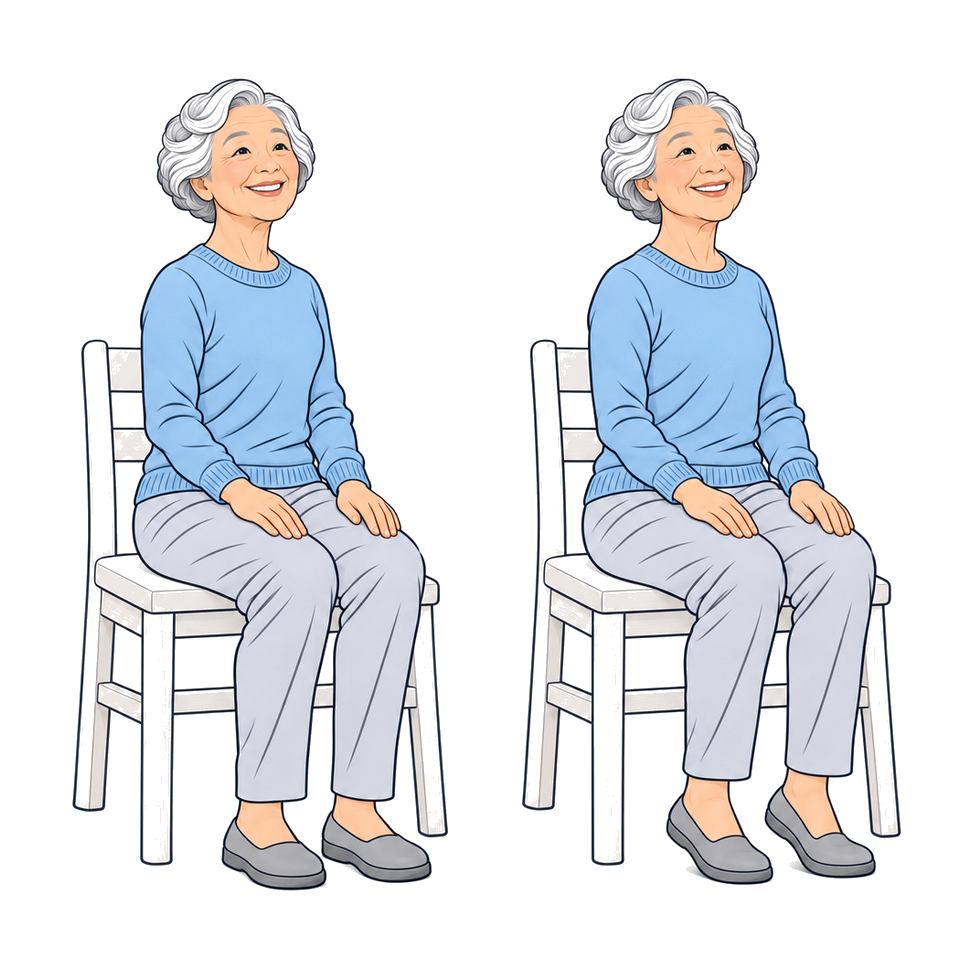
Stay upright, hands on knees. Slide hands only a little along the shins if you can keep the head above the heart and remain pain-free. Return to knees.
Compare the standing option
Hold the chair with both hands and stay upright. Gently bend and straighten the knees a tiny amount; do not reach for the feet.
Keep it safe: With osteoporosis, high blood pressure or glaucoma, never bend deeply, lower the head below the knees or strain. Keep hands on knees instead.
Move with easy, unforced breathing. No breath holding. Try one slow repetition per side, then rest.
Sit tall, feet flat. Lift both palms upward in front of your forehead, to at most head height. Soften your elbows and lower slowly.
Breathe in gently for 4 seconds Breathe out slowly for 6 seconds No breath holding. Normal breathing is always welcome.
Soft locally generated chimes mark the start, movement changes and finish.
Movement 1
Breathe easily, without holding or forcing your breath. The 4-second in / 6-second out rhythm is optional. Use your normal breathing if this feels uncomfortable. Stop for dizziness or breathlessness. A short comfort timer is not a clinical treatment dose.
Your illustrated, large-print companion
Take all eight movements with you
Seated and chair-supported standing illustrations, clear steps and a complete safety reminder. Generated entirely on your device.
100% Private: Generated in your browser, nothing uploaded